Pongal 2026: South Indian Gold Traditions Every NRI Should Know
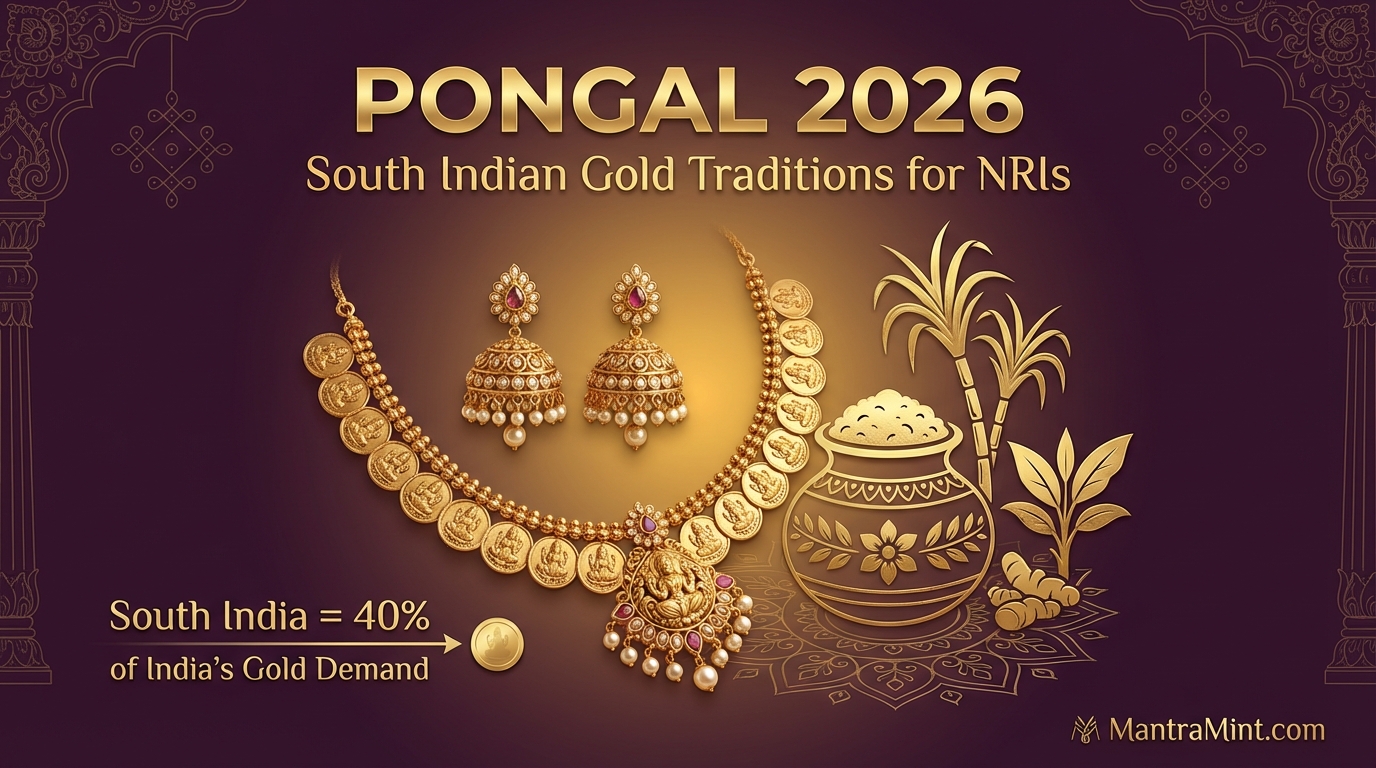
As the harvest festival of Pongal approaches on January 14-17, 2026, millions of South Indian families will celebrate with new gold purchases—a tradition as integral to the festival as the sweet pongal rice itself. For NRIs with roots in Tamil Nadu, Kerala, Karnataka, and Andhra Pradesh, understanding these traditions offers a way to stay connected to heritage while making meaningful investments.
With gold trading at approximately $4,444 per ounce according to Yahoo Finance and South India accounting for over 40% of the nation’s gold demand according to the World Gold Council, Pongal 2026 presents both cultural significance and investment opportunity.
Pongal 2026: Key Dates and Significance
| Day | Date | Name | Significance |
|---|---|---|---|
| Day 1 | January 14 | Bhogi | Discarding old, welcoming new prosperity |
| Day 2 | January 15 | Thai Pongal | Main celebration, sun worship |
| Day 3 | January 16 | Mattu Pongal | Honoring cattle, agricultural wealth |
| Day 4 | January 17 | Kaanum Pongal | Family gatherings, gift-giving |
Pongal marks the beginning of the Tamil month Thai and coincides with Makar Sankranti celebrations across India. The festival celebrates the harvest and the sun’s northward journey, making it an auspicious time for new beginnings—including gold purchases.
Why South India Dominates Gold Consumption
South India’s relationship with gold is unique even within India’s gold-loving culture. According to World Gold Council research, the southern states consistently lead the nation in gold demand:
| Metric | South India | All India | Source |
|---|---|---|---|
| Share of National Gold Demand | 40%+ | 100% | World Gold Council |
| Average Bridal Gold (Kerala) | 320 grams | 150-200 grams | WGC India Report |
| Household Gold Ownership | 76% | 65% | India Gold Policy Centre |
| Gold Loans Market Share | 65%+ | 100% | Industry estimates |
Cultural Factors Behind South Indian Gold Devotion
Several factors explain the South’s exceptional gold affinity:
- Temple Culture: South India’s wealthy temples, including Tirumala, Padmanabhaswamy, and Meenakshi Temple, established gold as sacred wealth centuries ago
- Matrilineal Traditions: Kerala’s Nair community practiced matrilineal inheritance, making gold a woman’s primary asset
- Agricultural Wealth: Historically prosperous agrarian communities converted harvest earnings into gold
- Banking Tradition: South India pioneered gold loans, making gold a liquid asset for farmers
Traditional South Indian Temple Jewelry
South Indian jewelry styles are instantly recognizable for their bold, divine-inspired designs. During Pongal, these traditional pieces see renewed demand:
Tamil Nadu Specialties
| Jewelry Type | Description | Occasion |
|---|---|---|
| Kaasu Maalai | Coin necklace with Lakshmi images | Weddings, festivals |
| Manga Malai | Mango-shaped gold beads | Auspicious occasions |
| Jhumkas | Bell-shaped temple earrings | Daily wear to festivals |
| Oddiyanam | Gold waist belt | Bridal wear |
| Vanki | Armlet with deity motifs | Traditional ceremonies |
| Nethi Chutti | Forehead ornament | Weddings, dance performances |
Kerala Traditions
Kerala’s gold jewelry is characterized by its exceptional weight and purity:
- Palakka Mala: Leaf-shaped necklace with green stones
- Karimani Mala: Black bead necklace with gold
- Mullamottu Mala: Jasmine bud design
- Poothali: Hollow gold pendant necklace
According to The Hindu, Kerala’s gold loan market alone exceeds ₹3 lakh crore, demonstrating the state’s massive gold holdings.
Pongal Gold-Buying Traditions
Thai Pongal Day Purchases
The second day of Pongal—Thai Pongal—is considered particularly auspicious for gold purchases. Many families:
- Buy gold coins featuring Lakshmi or Ganesha
- Purchase small jewelry pieces for daughters
- Add to family gold collections
- Gift gold to newlyweds or new mothers
The “Thai Masam” Effect
The Tamil month of Thai (mid-January to mid-February) is considered highly auspicious for:
- Starting new ventures
- Making major purchases
- Wedding ceremonies
- Gold investments
Jewelers across Tamil Nadu report 20-30% higher sales during Thai month compared to other periods, according to All India Gem & Jewellery Domestic Council data.
Regional Gold Price Variations
Gold prices can vary slightly across South Indian states due to local taxes, making charges, and market dynamics:
| State | Typical Making Charges | Tax Structure | Notes |
|---|---|---|---|
| Tamil Nadu | 12-18% | Standard GST | Chennai is price-setter |
| Kerala | 8-15% | Standard GST | Competitive due to high volume |
| Karnataka | 15-20% | Standard GST | Bangalore premium pricing |
| Andhra Pradesh | 12-18% | Standard GST | Tirupati temple influences |
| Telangana | 12-18% | Standard GST | Hyderabad design premium |
Note: Making charges vary by design complexity. Temple jewelry typically commands higher charges due to intricate work.
How Gold Connects to Harvest Prosperity
The connection between Pongal and gold runs deeper than mere auspiciousness:
Agricultural Wealth Conversion
Historically, South Indian farmers followed a predictable pattern:
- Harvest season (December-January): Rice, sugarcane crops sold
- Cash conversion: Surplus income converted to gold
- Pongal purchases: New gold bought during festival
- Inter-generational transfer: Gold passed to next generation
This cycle created deep cultural associations between harvest abundance and gold ownership that persist today, even among urban families and the diaspora.
Temple Donations and Gold
Many South Indians make gold donations to temples during Pongal:
| Temple | Estimated Gold Holdings | Annual Donations |
|---|---|---|
| Tirumala Tirupati | 10,000+ kg | 1,500 kg/year |
| Padmanabhaswamy | Unknown (estimated 1,000+ kg) | Varies |
| Meenakshi Amman | 500+ kg | Varies |
| Sabarimala | 300+ kg | Varies |
Sources: Temple trust reports, media estimates
The tradition of “kanakabhishekam” (gold shower for deities) during festivals connects personal prosperity with divine blessing.
NRI Guide: Participating in Pongal Gold Traditions from Abroad
For Indians in the USA with South Indian heritage, distance need not disconnect you from these traditions:
Digital Gold Options
| Method | Pros | Cons |
|---|---|---|
| Digital Gold Platforms | Instant, no shipping | Can’t wear immediately |
| Wire to Family | They choose design | Currency conversion costs |
| US-Purchased Gold | Dollar-denominated | Import duties if shipped |
| Gold ETFs | Pure investment | No cultural connection |
Gifting Strategies for Pongal 2026
For Parents/Elders:
- Gift digital gold they can convert locally
- Contribute to their gold savings
- Fund specific jewelry purchases
For Nieces/Nephews:
- Start gold accumulation funds
- Gift small amounts for Pongal tradition
- Build college or wedding fund in gold
For Newlyweds:
- Contribute to wedding gold fund
- Gift traditional pieces via local jewelers
- Send digital gold for immediate access
Tax Considerations for US-Based Gifters
| Consideration | Limit/Rule | Notes |
|---|---|---|
| Annual Gift Tax Exclusion | $18,000 per recipient | No reporting needed |
| Married Couple Exclusion | $36,000 per recipient | Gift-splitting election |
| Reporting Requirement | Form 3520 for gifts from foreign persons | Recipients may need to file |
| Gold Investment Taxes | Collectibles rate (28% max) | For physical gold sales |
Consult a tax professional for your specific situation.
Current Market Context: January 2026
As of January 8, 2026, precious metals markets show continued strength:
| Metal | Current Price | Weekly Change | YTD Change |
|---|---|---|---|
| Gold | $4,444/oz | +2.1% | +1.8% |
| Silver | $73.24/oz | +5.2% | +3.4% |
| Gold (INR) | ~₹122,000/10g | Varies with forex | Strong gains |
Prices approximate; check live rates before purchasing.
Why South Indian Demand Matters for Global Prices
South India’s concentrated gold demand influences global markets:
- Wedding Season Impact: November-February wedding surge affects supply
- Festival Buying: Pongal, Onam, Vishu create predictable demand spikes
- Harvest Correlation: Agricultural output affects regional purchasing power
- Temple Demand: Continuous temple donations add to consumption
The World Gold Council notes that South Indian demand patterns help explain gold’s Q1 strength in many years.
Investment vs. Adornment: The Modern Dilemma
Today’s South Indian families increasingly debate whether festival gold should be:
Traditional Jewelry (Adornment Focus)
Pros:
- Cultural connection
- Wearable heritage
- Emotional value
- Social significance
Cons:
- 15-25% making charges lost
- Design depreciation
- Storage/security needs
- Lower resale value
Investment Gold (Wealth Focus)
Pros:
- Near-spot pricing
- Easy liquidation
- Simple storage
- Tax efficiency (digital)
Cons:
- No cultural display
- Can’t wear
- Less emotional connection
- May feel “incomplete”
The Balanced Approach
Many modern families adopt a hybrid strategy:
- 60% Investment Gold: Coins, bars, digital gold for wealth building
- 40% Jewelry: Key traditional pieces for cultural occasions
This preserves tradition while optimizing financial returns—a pragmatic approach that honors both values.
Planning for Pongal 2026: Action Steps
If You’re in the USA
1 Week Before (January 7-13):
- Decide gift recipients and amounts
- Check current gold prices
- Set up digital gold account if needed
- Confirm family’s jewelry preferences
Pongal Week (January 14-17):
- Send digital gold on Thai Pongal (January 15)
- Call family during celebrations
- Share in the tradition virtually
After Pongal:
- Confirm gifts received
- Plan for next auspicious occasion (Akshaya Tritiya)
- Consider starting recurring gold purchases
For Family in India
- Convert digital gold gifts at trusted jewelers
- Compare making charges before converting
- Keep certificates for purity verification
- Document purchases for future reference
Key Takeaways
- South India leads India’s gold demand at 40%+, with Kerala brides averaging 320 grams
- Pongal 2026 runs January 14-17, with Thai Pongal (January 15) most auspicious for gold
- Temple jewelry traditions (Kaasu Maalai, Jhumkas, Manga Malai) remain culturally significant
- NRIs can participate remotely through digital gold and coordinated family gifting
- Hybrid approach recommended: Balance investment gold with traditional jewelry purchases
- Current prices favor buyers who dollar-cost average over time
Celebrate Pongal with Mantra Mint
This Pongal, bridge the distance between the USA and your South Indian roots with digital gold from Mantra Mint.
Why Choose Mantra Mint for Pongal Gifting?
- Instant delivery: Gift gold on Thai Pongal morning, received immediately
- No minimums: Start with as little as $10 in 24K gold
- Family sharing: Multiple recipients can receive and accumulate
- No customs hassles: Digital gold, no physical shipping
- Dollar-denominated: Benefit from USD strength
Whether you’re sending gold to parents in Chennai, contributing to a niece’s wedding fund in Coimbatore, or starting a Pongal tradition for your own children, Mantra Mint connects your cultural values with modern convenience.
Send Pongal Gold Today — Keep the tradition alive, from anywhere.
Sources
- World Gold Council - India’s Jewellery Demand and Market
- World Gold Council - Gold Demand Trends
- Yahoo Finance - Gold Futures
- Yahoo Finance - Silver Futures
- The Hindu - Kerala Gold Loans Market
- All India Gem & Jewellery Domestic Council
- India Gold Policy Centre - IIM Ahmedabad
- Tirumala Tirupati Devasthanams - Temple Trust
Ready to start investing in gold?
Join thousands of Indian families building wealth with Mantra Mint.
Get Started Free