
Gold During Central Bank Crises: From Nixon's 1971 Shock to the 2026 Fed Investigation
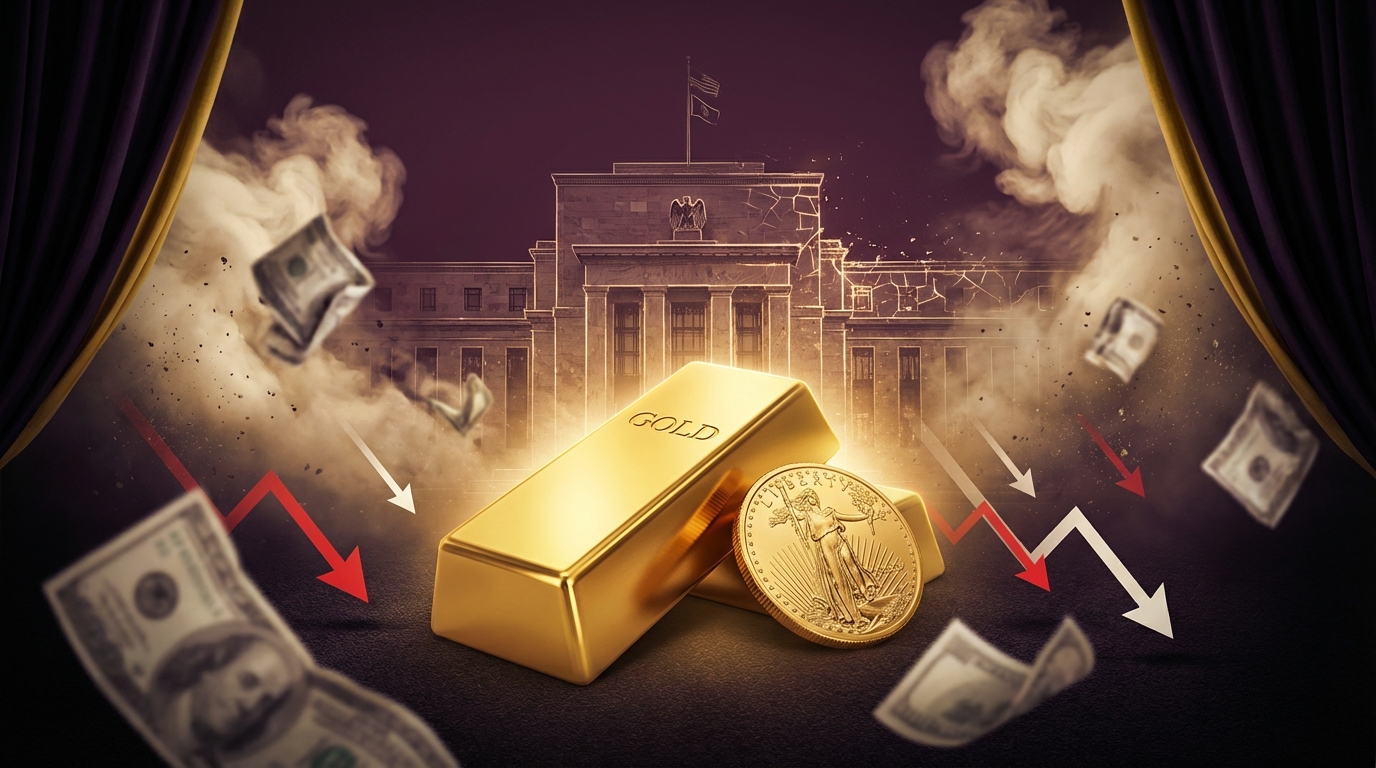
History doesn’t repeat, but it often rhymes. On August 15, 1971, President Nixon announced the end of dollar-to-gold convertibility, sending shockwaves through global markets. Fifty-five years later, on January 10, 2026, federal prosecutors opened a criminal investigation into Fed Chair Jerome Powell, triggering another flight to gold that sent prices to $4,609/oz—a 9,400% gain since Nixon’s fateful Sunday evening address.
According to CNBC, gold hit a record high of $4,629.94/oz on Monday as investors piled into safe-haven assets. The parallels between 1971 and 2026 offer crucial lessons for anyone holding—or considering—precious metals.
The Nixon Shock: When Everything Changed
On August 15, 1971, President Nixon went on national television to announce what would become known as the “Nixon Shock.” According to the Federal Reserve History:
“President Nixon closed the gold window and imposed a 10 percent surcharge on all dutiable imports in an effort to force other countries to revalue their currencies against the dollar.”
Gold’s Response to Bretton Woods Collapse
| Year | Gold Price | Event | Change |
|---|---|---|---|
| 1971 (pre-shock) | $35/oz | Fixed under Bretton Woods | Baseline |
| 1972 | $63.84/oz | Post-shock adjustment | +82% |
| 1973 | $106.48/oz | Bretton Woods fully collapsed | +204% |
| 1974 | $195.20/oz | Oil crisis + inflation | +458% |
| Jan 1980 | $850/oz | Peak of first bull market | +2,329% |
According to the State Department’s historical archives, the Nixon Shock “marked the beginning of the end for the Bretton Woods system of fixed exchange rates established at the end of World War II.”
Why Nixon Ended Gold Convertibility
The collapse was years in the making. According to CEPR’s analysis, the Bretton Woods system faced mounting pressures:
| Factor | Impact |
|---|---|
| Vietnam War spending | Flooded markets with dollars |
| Great Society programs | Increased domestic spending |
| Trade deficits | Foreign nations accumulated dollars |
| Gold drain | US gold reserves depleted |
| Arbitrage pressure | $35/oz became unsustainable |
According to Yale SOM, the Nixon Shock “effectively converted the U.S. dollar into a fiat currency,” fundamentally changing how gold would function in the global financial system.
Five Major Central Bank Crises: Gold’s Track Record
Gold’s performance during central bank and monetary crises follows a consistent pattern. According to Gainesville Coins’ historical analysis, here’s how gold performed across major events:
1. Nixon Shock (1971-1973)
| Phase | Gold Price | Timeframe |
|---|---|---|
| Fixed rate | $35/oz | Pre-August 1971 |
| Initial spike | $63.84/oz | Within months |
| Full liberation | $106.48/oz | By 1973 |
| Peak | $850/oz | January 1980 |
Total gain from Nixon Shock to 1980 peak: 2,329%
2. Volcker’s War on Inflation (1979-1982)
Fed Chair Paul Volcker raised rates to 20% to break inflation, causing a severe recession but ultimately stabilizing the dollar.
| Phase | Gold Price | Context |
|---|---|---|
| Peak (Jan 1980) | $850/oz | Hunt Brothers squeeze + Fed uncertainty |
| Volcker victory | $300/oz | By 1982 |
| Bottom | $252/oz | 1999 |
Gold fell 70% as confidence in the Fed was restored—demonstrating that gold rises on uncertainty and falls when central bank credibility strengthens.
3. The 2008 Financial Crisis
According to Hero Bullion’s recession analysis, the 2008 crisis showed gold’s complex behavior:
| Phase | Gold Price | Change | Context |
|---|---|---|---|
| Pre-crisis (Mar 2008) | $1,011/oz | — | Bear Stearns rescue |
| Crisis low (Oct 2008) | $730/oz | -28% | Lehman collapse, liquidity crunch |
| Recovery (Oct 2010) | $1,300/oz | +78% | QE programs begin |
| Peak (Aug 2011) | $1,917.90/oz | +163% from low | Full crisis response |
Key insight: Gold initially fell during the 2008 panic as investors sold everything for cash. But the Fed’s response—quantitative easing and zero rates—drove gold to new highs.
4. COVID-19 Pandemic (2020)
| Phase | Gold Price | Change |
|---|---|---|
| Start of 2020 | $1,575/oz | — |
| August 2020 peak | $2,072.50/oz | +32% |
| Post-crisis | Held gains | New floor established |
According to Scottsdale Bullion, “Unlike 2008’s liquidity-driven selloff, massive central bank stimulus and near-zero interest rates created ideal conditions for gold appreciation.”
5. The 2026 Fed Investigation
The current crisis is unprecedented: the first time in American history that a sitting Fed Chair faces criminal investigation. According to Fortune:
“Stock futures slide while gold and silver jump after Powell investigation raises fears over the Fed’s independence.”
| Metric | Value | Change |
|---|---|---|
| Gold (Jan 12, 2026) | $4,609/oz | +2.2% daily |
| Silver | $84.04/oz | +4.5% daily |
| Weekly gold gain | +6.0% | Best week of 2026 |
| Weekly silver gain | +17.5% | Explosive breakout |
According to Euronews, “Gold and silver soar after US targets Federal Reserve in Powell probe.”
Why Central Bank Crises Drive Gold Higher
The Fear Index Theory
According to Financial Content:
“The record-high gold price is not merely a reflection of supply and demand, but a ‘fear index’ measuring the perceived stability of the world’s reserve currency.”
Key Drivers During Central Bank Crises
| Factor | Mechanism | Impact on Gold |
|---|---|---|
| Currency uncertainty | Dollar weakness | Strong positive |
| Rate cut expectations | Lower opportunity cost | Positive |
| Inflation fears | Real asset demand | Strong positive |
| Institutional credibility | Trust in fiat | Inverse relationship |
| Safe-haven flows | Risk-off positioning | Strong positive |
The Independence Premium
Central bank independence is foundational to monetary stability. When that independence is threatened, gold becomes the ultimate hedge against institutional failure.
According to FXStreet:
“Gold jumps to record highs amid Fed turmoil and rising geopolitical risks.”
Historical Returns: Gold vs. Cash Since 1971
| Asset | 1971 Value | 2026 Value | Total Return |
|---|---|---|---|
| Gold | $35/oz | $4,609/oz | +13,069% |
| US Dollar | $1.00 | $0.13 (purchasing power) | -87% |
| Savings account ($1,000 at 3%) | $1,000 | ~$5,400 | +440% |
According to BeinCrypto’s analysis:
“Gold has surged over 9,400% since Nixon ended the gold standard in 1971, transforming from a government-controlled asset at $35 per ounce to today’s dynamic market price.”
2026 Price Forecasts Amid Fed Uncertainty
Major institutions have updated their targets following the Powell investigation:
| Institution | 2026 Target | Rationale | Source |
|---|---|---|---|
| Goldman Sachs | $4,900/oz | Central bank buying | TradingKey |
| JP Morgan | $5,055-$5,300/oz | Fed policy shift | Market analysis |
| HSBC | $5,000-$5,050/oz | Momentum + Fed cuts | FXStreet |
| Bull case | $6,000/oz | Full Fed crisis | Finance Magnates |
According to Gulf Business, there are six key factors driving gold prices higher in 2026, with central bank policy uncertainty at the top.
What Powell’s Term Expiration Means
Jerome Powell’s term as Fed Chair expires in May 2026. According to Seeking Alpha:
“The White House is expected to nominate National Economic Council Director Kevin Hassett as his successor. However, several key Senate Republicans have already signaled they may block any nominee until the ‘legal intimidation’ of the sitting Chair is resolved.”
Scenarios for Gold
| Scenario | Fed Policy | Gold Impact |
|---|---|---|
| Powell removed early | Dovish pivot expected | Very bullish |
| Powell serves full term | Policy continuity | Neutral to bullish |
| Hassett confirmed | Potentially more accommodative | Bullish |
| Extended vacancy | Maximum uncertainty | Extremely bullish |
Lessons for Investors
1. Gold Rises on Uncertainty, Falls on Resolution
The Volcker lesson is instructive: when central bank credibility is restored, gold falls. But during periods of uncertainty, gold protects.
2. Don’t Wait for the Crisis
Those who bought gold before the Nixon Shock at $35/oz captured the full 2,329% rally to 1980. Those who waited missed significant gains.
3. The Initial Dip Can Be a Gift
In 2008, gold fell 28% during the Lehman panic before rallying 163% over the next three years. Liquidity events create buying opportunities.
4. Hold Through Volatility
According to Gold Price Live, “Understanding gold’s historical performance during major economic events reveals that while the precious metal has consistently preserved wealth over decades, its behavior during crises is far more nuanced than the simple ‘safe haven’ narrative suggests.”
Current Positioning: Where We Stand
| Metric | Current Value | Historical Context |
|---|---|---|
| Gold price | $4,609/oz | All-time high territory |
| Silver price | $84.04/oz | Multi-decade highs |
| Gold/silver ratio | 54.9 | Compressing (bullish for silver) |
| YoY gold return | +70% | Best since 1979 |
| YoY silver return | +182% | Explosive catch-up trade |
Key Takeaways
-
Historical pattern confirmed: Gold rises during central bank crises—every time since 1971
-
Nixon Shock to today: Gold up 13,069% since ending convertibility
-
2026 parallels 1971: Fed investigation threatens monetary independence
-
Price targets rising: Major banks now see $5,000-$6,000/oz possible
-
Silver amplifies: At +17.5% weekly vs. gold’s +6%, silver shows typical leverage
-
Opportunity cost: Cash lost 87% of purchasing power since 1971
-
Resolution matters: If Fed credibility is restored, expect consolidation
-
History favors holders: Long-term gold ownership has outperformed cash dramatically
The Bottom Line
From the Nixon Shock to the Powell probe, gold has served one consistent function: protection against monetary uncertainty. Whether it’s a president ending gold convertibility or prosecutors investigating a Fed Chair, the response has been the same—capital flows to the asset that no government can print.
As the 2026 Fed crisis unfolds, history suggests gold’s role as the ultimate safe haven remains intact. The question for investors isn’t whether central bank crises are good for gold—that’s been answered across 55 years of data. The question is whether you’re positioned before the next chapter is written.
Build Your Gold Position with MantraMint
Whether you’re protecting against Fed uncertainty or building generational wealth, MantraMint makes gold investing simple for Indians in the USA.
Why MantraMint?
- Start with $10: No need to buy full ounces
- 24K pure gold: Investment-grade quality, not diluted alloys
- Auto-invest: Build positions systematically through any crisis
- Gift instantly: Send gold to family for any occasion
- No storage hassle: Secure, insured vault storage included
History shows gold protects during central bank crises. Don’t wait for the next chapter to start building your position.
Start Investing Today — Because history has lessons for those who listen.
Sources
- CNBC - Gold Record $4,600 Powell Probe
- Fortune - Markets React to Powell Investigation
- Federal Reserve History - Gold Convertibility Ends
- State Department - Nixon Shock
- Yale SOM - How Nixon Shock Remade World Economy
- Gainesville Coins - Historical Gold Prices
- Hero Bullion - Recessions and Gold Prices
- Scottsdale Bullion - Gold During Recession
- Euronews - Gold Silver Soar Powell Probe
- FXStreet - Gold Record Highs Fed Turmoil
- Seeking Alpha - Gold All-Time High Fed Threat
- Finance Magnates - Gold $6,000 Prediction
- TradingKey - Gold Wall Street Forecast 2026
- Gulf Business - Gold Prices 2026 Factors
- BeinCrypto - Nixon Shock Parallels
- CEPR - Bretton Woods Imbalances
Ready to start investing in gold?
Join thousands of Indian families building wealth with Mantra Mint.
Get Started Free